
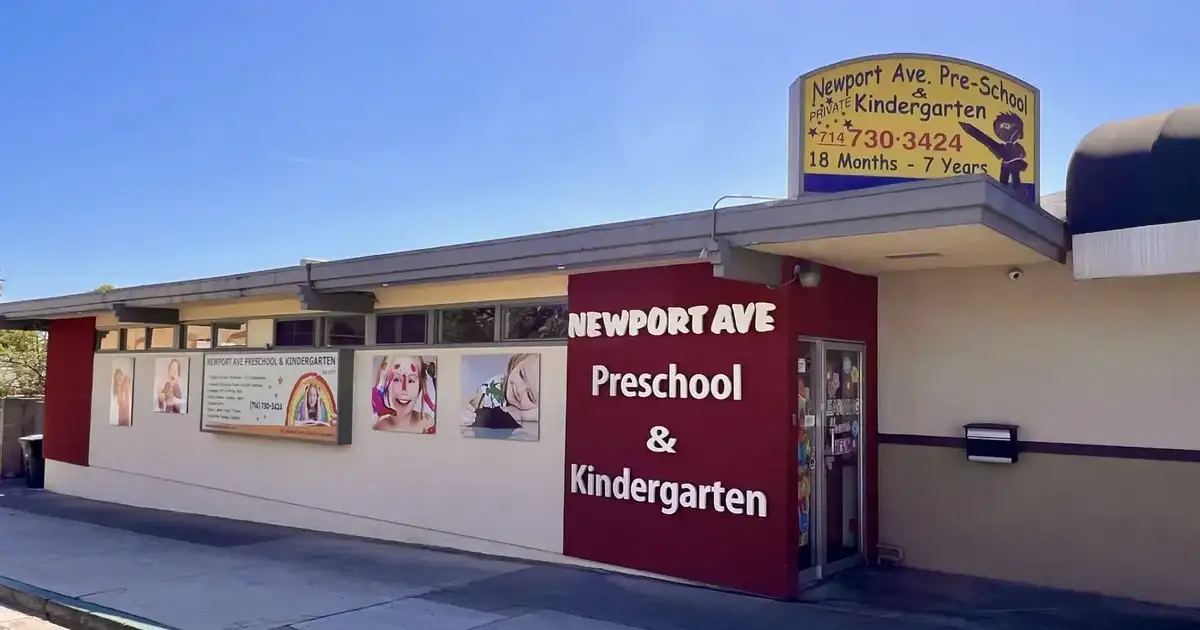
Every veteran preschool parent knows the first-year pattern: your child starts school in September, and by November your household has hosted more viruses than a research lab. It’s real, it’s temporary, and it’s not a sign your school is dirty or your child is fragile, it’s an immune system meeting the human virome on an accelerated schedule. Here’s the honest epidemiology of the first preschool year as we explain it to Tustin families at Newport Ave Preschool & Kindergarten: why it happens, what actually helps, and the consolation prize at the end.
Key takeaways
- Six to twelve colds a year is NORMAL for a young child in group care, each shedding symptoms for a week or two, so winters feel continuous.
- The first year of group care is the peak; illness frequency drops noticeably in year two and keeps falling.
- Kids who do group care young get sick more now and less in elementary school, the tax gets paid either way; group care just pays it early.
- What actually reduces spread: handwashing discipline, sick-day rules honored by every family, and vaccines on schedule, not disinfectant heroics.
- Build the family sick-day system in September, not mid-crisis: backup adults, split shifts, realistic expectations.
Why is my child sick constantly since starting preschool?
Because immunity is experiential, and your child just enrolled in the experience. There are a couple hundred common cold viruses alone, and a small child meets essentially all of them for the first time; each first meeting produces real symptoms while the immune system writes its file. Home-based toddlers meet these viruses slowly, through a small social circle; a preschool room compresses the curriculum, toys travel hand to mouth to hand, and two dozen small hosts share air and doorknobs all day. The arithmetic lands where pediatricians say: young children in group care commonly run six to twelve respiratory infections in the first year, each lasting one to two weeks with a lingering cough-tail, which means a November-to-March stretch can feel like one continuous illness while actually being five distinct, ordinary ones. Add a stomach bug, the pink-eye lottery, and hand-foot-mouth’s occasional tour, and you have the standard first-year bingo card. None of it is evidence of a problem, the same child, kept home until kindergarten, runs a very similar gauntlet at five, in a classroom of 24 with attendance policies and reading instruction attached. The virome bill always comes. Group care invoices it at three, when the stakes are lower.
Does it actually get better, or do parents just get numb?
Both, but measurably the first. The immune file-building is cumulative: each virus met and beaten leaves antibodies and trained responses, so year two in the same environment produces conspicuously fewer sick days than year one, and year three fewer still, families feel the drop and the data agree. The more interesting finding is the long crossover: studies following children into elementary school find that early group-care kids, who paid heavily in toddler colds, get sick less than home-care peers during the early school years, because their files are already written when kindergarten’s germ pool arrives; the home-care kids pay the same tax then, during years when missing school costs actual instruction. The practical translation for a shell-shocked first-year family: you are not in a permanent state; you are in a front-loaded one. The February when you realize your child hasn’t been sick in six weeks arrives for everyone, usually in year two, usually noticed with disbelief.
What actually reduces the spread, and what’s theater?
The boring fundamentals do the work. Hands: rigorous washing at the transmission moments, arrival, meals, toileting, noses, is the single highest-value control in any building, which is why our routines are choreographed and why the same habit at home extends the coverage. Honored sick rules: exclusion criteria only work when every family plays honestly, the fever-reducer-and-drop-off maneuver donates the virus to the whole class and buys its user four hours; a community that keeps sick kids home genuinely runs healthier, and it’s the one control parents own entirely. Vaccines: the schedule plus annual flu shots removes the worst players from the board outright, which matters more than anything anyone can do about ordinary colds. Air and outdoors: generous outdoor time is underrated infection control, distance and fresh air dilute what indoor air concentrates. And the theater: obsessive surface-disinfection beyond sensible daily cleaning yields little (these viruses move overwhelmingly hand-to-face), immune gummies are commerce rather than science, and keeping a healthy child home to avoid germs just defers the same curriculum with interest. Spend the effort where transmission actually happens: hands, honesty, and shots.
How does a working family survive the sick season logistically?
With a system built before it’s needed, September you should assume five to ten sick days are coming and design accordingly especially when children are new to school and building up those immunities. The roster: list every adult who could cover a sick morning, both parents’ flexibility honestly mapped (whose meetings actually move?), grandparents, the neighbor trade, and agree in advance how the first call gets decided, because 6 AM negotiations over a feverish toddler corrode marriages. The split shift: the underused move, one parent covers morning, the other afternoon; two half-days of work beat two zero-days, and most sick preschoolers mostly need a lap and a couch. The kit: a thermometer you trust, fever reducer dosed for current weight, electrolyte pops in the freezer, and the pediatrician’s nurse line saved. The expectations: tell your manager in September that you have a first-year preschooler; the sentence buys more grace prospectively than any apology buys retroactively. And the re-entry rule: fever-free 24 hours unmedicated is the classic, honor its spirit, because a child returned too early relapses on you by Thursday, which is the false economy every family runs exactly once. The season is finite. The system is what makes it survivable while it lasts.
Frequently asked questions
When do I keep my child home?
Fever, vomiting or diarrhea, the contagious specifics, or too miserable to participate. When it’s borderline, call and describe, we’d rather advise than exclude.
My child is on cold number six and it’s only January. Worry?
Six by January in year one is regular preschool immunology. Worth a pediatrician conversation: infections that are unusually severe, always bacterial, or a child who isn’t thriving between them.
Do you clean toys and surfaces?
Daily and on schedule, with extra rotation during outbreak weeks, it matters; it’s just not where most transmission lives. Hands are.
Will you tell me if something is going around?
Yes, exposure notices go out for the notifiable and the practical alike. You’ll know what week it is in the great germ calendar.
Ask us anything about the sick-season playbook, we’ve run many. Call (714) 730-3424, Newport Ave Preschool & Kindergarten in Tustin.