
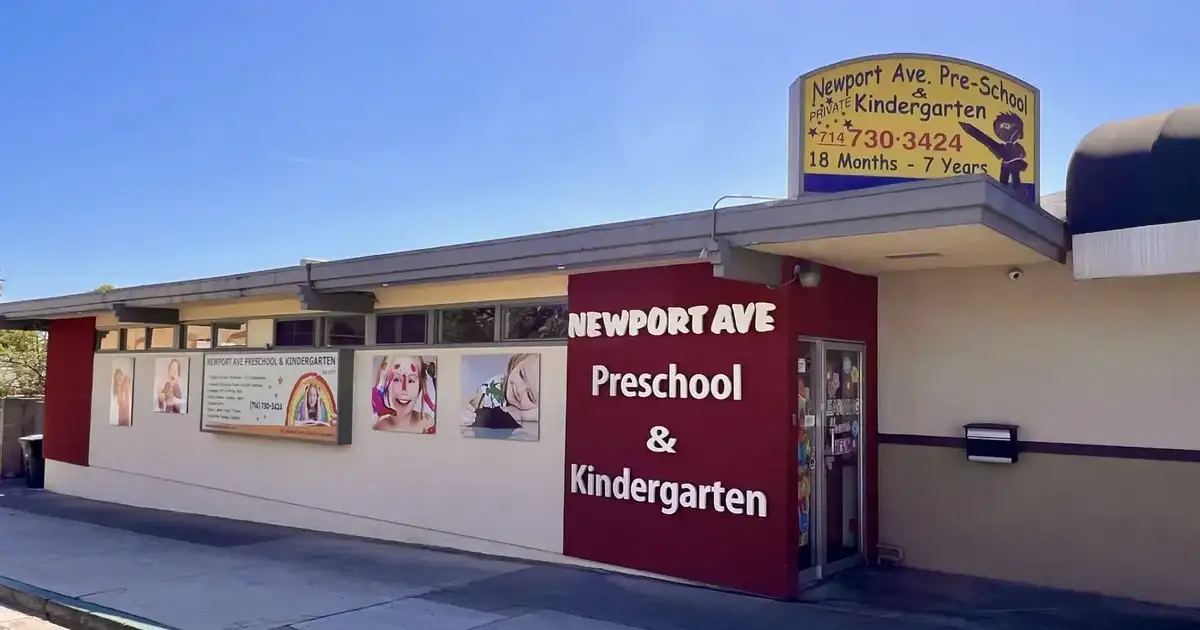
Sometime around June, many preschool families get a note announcing splash days, which of course we do too! For lots of children it’s the best part of the school year. Sprinklers, water tables, spray bottles, and soaked, shrieking, happy kids make summer water play a preschool favorite. It keeps children cool and teaches real skills at the same time. Here’s how splash days usually work at preschools like Newport Ave Preschool & Kindergarten in Tustin, what safe water play looks like, what to pack, and what all that pouring is teaching.
Key takeaways
- Preschool splash days usually mean sprinklers, spray bottles, and water tables, not pools. Any water play still needs an adult watching.
- Water play is rich sensory and science learning: pouring, spraying, and sink-or-float tests, with built-in cooling.
- Safe water play has four parts: close supervision, no standing water left out, sun protection, and care on slippery surfaces.
- The gear list is short: a labeled swimsuit, water shoes, a towel, a full dry outfit, and sunscreen put on at home.
- Children who are cautious about water can start with water tables and spray bottles. They don’t need to get splashed to join in.
What does a splash day look like?
Think of a rotation of small water stations, not a pool party.
A typical setup has sprinklers or a gentle spray for run-through fun. There are water tables with cups, funnels, and waterwheels for the builders. Spray bottles and brushes with buckets let children “paint” the fence with water, which shows evaporation. There are bins for sink-or-float tests and often a bubble station.
Groups usually rotate through in the morning, before the day’s heat peaks. That’s good for comfort and for sun safety. A session of about an hour is common, followed by a towel-and-dry-clothes break and a snack in the shade.
What you don’t see matters just as much. A careful program doesn’t set out wading pools deep enough to sit in, and it doesn’t leave standing water unattended. Buckets get dumped when a station closes, because young children can drown in very little water. Adults stay at the stations, watching the water, not chatting at the fence.
What does safe water play involve?
Safe water play has four parts.
Supervision. Water raises the need for attention, so adults are stationed at the water with their eyes on it and nothing else in their hands. Each station should have an adult whose job is that station.
Water management. Sprinklers and tables use less standing water than a pool, but any water still needs an adult watching. Containers get emptied when the play is done, because standing water plus an unwatched minute is a situation that drowning-prevention groups warn about.
Sun. Water play means bare skin and reflected light. So programs often schedule it in the morning, use shade for waiting areas, keep hats on between soakings, and ask parents to apply sunscreen before drop-off. Programs generally need your written permission before staff apply sunscreen, so sign that form early, not on the first hot Friday.
Surfaces. Wet ground and running preschoolers are a common cause of bumps and scrapes. Water shoes, walking-feet rules near slick spots, and spacing between stations all help.
Ask any program how it handles each part. You should get clear answers.
What goes on the gear list?
Five items, all labeled, packed the night before.
A water outfit. Pick a swimsuit or water clothes your child can mostly manage alone, teachers will assist as needed but an easier suit to put on and off does help! Put the name on the tag, because June produces a classroom full of identical shark swimsuits.
Water shoes. Secure sandals with backs also work. Flip-flops don’t survive the running test and are not allowed as children often lose them, and pose a safety hazard for tripping. Bare feet are strictly not allowed at school at any time.
A towel. Label it, and pick a size your child can handle.
A full dry outfit. Include underwear and socks, in a zip bag, separate from the regular spare set.
Sunscreen. Apply it at home before drop-off. You can also leave the bottle, labeled and complete a sunscreen waiver so teachers can assist with follow up applications if needed.
Two tips. Put sunscreen on before the swimsuit so you cover the skin under the strap edges, where the classic burn happens. And on splash mornings, send your child already wearing the swimsuit. A class changing into swimsuits can use up half the session, and changing out of them afterward is the easier half.
What is water play teaching besides joy?
A lot, and it happens in July heat.
Sensory and motor skills. Water offers temperature, pressure, resistance, and flow in one material. Hauling buckets is “heavy work,” which many children find calming. Pumping spray bottles builds the hand squeeze that writing needs later.
Science. Cause and effect happens fast: tip, pour, splash, flow. Sink-or-float guesses get instant answers. A waterwheel spins faster with a higher pour. The water “paint” on the fence vanishes in the sun, which gets observed daily and debated.
Teachers can add words along the way, like absorb, overflow, current, and evaporate. Words often stick better when they come with hands-on experience.
Social skills. Water stations are shared-resource negotiations: the good funnel, a turn with the hose, the group moat. It’s the same turn-taking learned in the block corner, only wetter.
Calming down. Many teachers find that water settles wound-up children.
Frequently asked questions
My child hates getting splashed. Do they have to join in?
Good programs give options. Water tables and spray-bottle stations offer real water play without getting splashed, and many cautious children move toward the sprinkler on their own schedule. Watching with feet in a puddle counts, but if children wish not to partake at all we always have other activities available to welcome those children as well.
What about swim diapers for the youngest?
Rules for toddlers vary by program, so ask about your child’s group. The youngest children are usually offered the gentlest stations.
Are splash days weekly all summer?
Schedules differ. Many programs plan recurring days through the hot months and send notes ahead so you can pack the gear. Check the summer calendar and ask your child’s teacher.
Do splash days replace regular outdoor play?
They usually fit into the normal outdoor time. The rest of the day runs on its usual rhythm, with everyone a little damper and often calmer.
Ask about summer water play when you tour. Call (714) 730-3424, Newport Ave Preschool & Kindergarten in Tustin.