
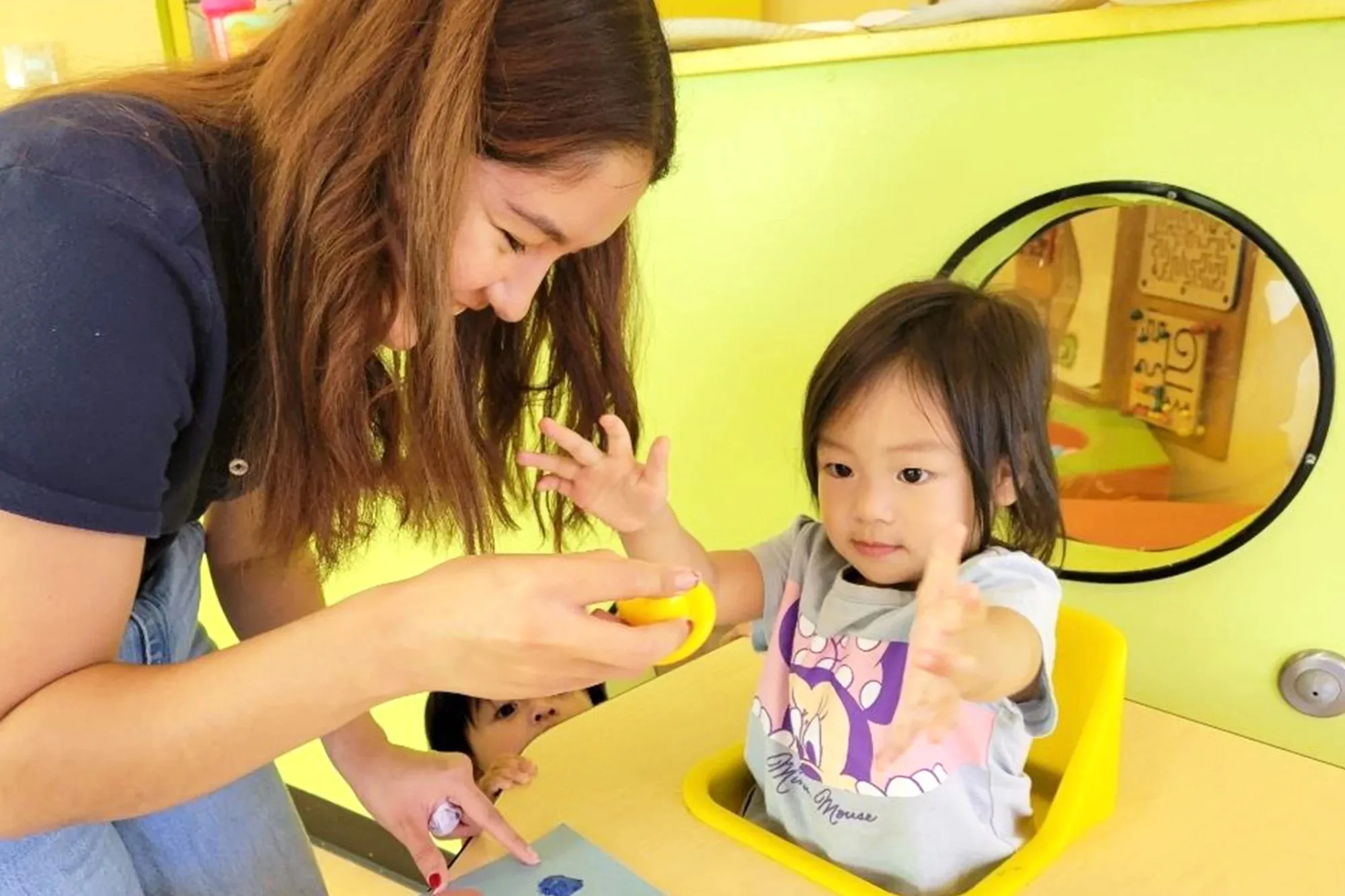
Crying at drop-off is the most normal event in early childhood, and the hardest one a parent walks away from. The facts that steady most families: the tears usually stop within minutes of the goodbye, a short consistent ritual beats a long negotiated one, and sneaking out makes tomorrow worse, not better. At Newport Ave Preschool & Kindergarten in Tustin, teachers treat the first month of goodbyes as curriculum, because learning that a parent leaves and comes back is a real lesson, and children pass it.
Key takeaways
- Separation anxiety is healthy attachment behavior, most intense between 18 months and 3 years, it means the bond works.
- Most children settle within 5–10 minutes of the goodbye; teachers will tell you honestly if yours doesn’t.
- A short identical ritual, hug, phrase, wave, outperforms lingering every time.
- Never sneak out: the child who watched you leave trusts the room; the one who turned to find you gone scans the exits all day.
- Expect regression after long weekends, vacations, and illness, it fades faster the second time.
Why do the tears stop so fast after I leave?
Because the tears are for you, genuinely, and that’s communication, not manipulation. A two- or three-year-old protests the transition, not the destination: once the transition is over, the protest has no audience and the room takes over, a teacher’s lap, a favorite bin, the breakfast table. Teachers keep an informal clock on new enrollees and the pattern is remarkably stable: the child who sobbed at 8:02 is stacking blocks by 8:10. What keeps crying going is an extended goodbye, because every re-hug restarts the protest from zero, the parent who lingers to comfort is, mechanically, relaunching the hard part. You are not being cold by leaving cleanly; you are ending the difficult minute sooner, and giving the room the handoff it needs to do its half of the work. If you want the proof rather than the reassurance, call the front desk at 9:00, we’d rather report “settled in four minutes” than have you carry the doorway face all morning.
What should our goodbye ritual look like?
Small, identical, and finished. Pick a sequence you can run in under a minute, walk in, lunchbox in the cubby together, one hug, one phrase (“Mama always comes back”), hand to teacher, wave from the door, then do exactly that every day, including the days it goes badly. Sameness is the mechanism: a routine a child can predict is a routine a child can finish, and finishing is what converts the goodbye from an open wound into a closed loop. Two upgrades that help: let your child carry something into the room (their own backpack counts, competence is calming), and name the pickup point in child time, not clock time: “after outside play, I’ll be here.” Clock time means nothing at three; sequence time means everything. And the one prohibition that matters more than all the techniques: never sneak out. The vanished parent teaches a child to audit the exits all day; the parent who left visibly, after the ritual, teaches them that goodbyes are survivable and predictable, which is the entire lesson.
What does the teacher do after I walk out?
A taught skill, not an improvisation. The receiving teacher gets on the child’s level, takes them physically if needed, a howling toddler handed over mid-cry is fine, and better than a renegotiated goodbye, and moves them toward a task with their hands in it: water tables and play-dough beat sitting activities, because busy hands settle a nervous system. Then, the part parents don’t always know: the teacher watches the clock. A child still inconsolable after fifteen or twenty minutes triggers a real conversation with you, not a brave face at pickup, because persistent distress is information the plan should absorb: shorter days for a stretch, a comfort object in the cubby, the same teacher receiving every morning. Ask on any tour how the room handles a hard drop-off; a confident, specific answer to that question tells you more about a program than the paint does. The goodbye is a two-team play, and the receiving half is a professional skill your child’s teachers have run a thousand times.
When is it more than normal separation anxiety?
Give any new start two to four weeks before judging, and expect setbacks after every break in rhythm, the post-vacation regression is textbook and fades within a week when the ritual holds. The flags worth acting on are different in kind, not just volume: distress that lasts most of the day rather than the first minutes, a child who stops eating or sleeping at school, dread showing up the night before, or a regression that deepens in week four instead of fading. In those cases the fix is collaborative, a slower ramp, engineered comfort, occasionally the honest conclusion that this particular child needs a different start shape, and it begins with the sit-down where teachers bring the all-day data and you bring the home picture. What a hard goodbye almost never means is that preschool is wrong for your child; it means the on-ramp needs regrading, and regrading is routine work here. The child crying at the door in September is, in the overwhelming majority of cases, the child lobbying to stay at pickup by November, and both behaviors are the same attachment system, working correctly at both ends of the day.
Frequently asked questions
Should I stay until my child stops crying?
No, stay through your ritual, then go. A parent hovering at the room’s edge keeps the protest alive. Call at 9:00 for the honest report instead.
Is it better to start with short days?
Often, yes, many families start with shorter days and build up as the goodbye gets easier. Ask about a gradual first week when you enroll.
My child was fine for months and suddenly cries again. Why?
Regression after vacations, illness, a new sibling, or a room change is standard. Rerun the same ritual; it usually fades within a week, faster than round one.
Does crying at drop-off mean my child hates school?
Ask about the rest of the day: a child who cries for three minutes and then paints, plays, and eats well is doing fine. Trust the whole day, not the doorway.
Come watch a settled morning work, the 8 AM drop-off routine is the best exhibit we have. Call (714) 730-3424, Newport Ave Preschool & Kindergarten in Tustin.